Archive for July, 2010

Kigali – First Day in Rwanda

We flew in to Kigali around 10:30 at night. As soon as we landed I could already tell a few differences between Tanzania and Rwanda. The city was glittering with lights, (unlike the quiet town of Moshi) and set in beautiful rolling hills.

In the morning we took a city tour. We went by the parliament house, the Ambassador Row (where all the UN ambassadors live), city center (where the Hotel Mille Collines is located), and the genocide memorial.

For those who may not be aware of the history of genocide in Rwanda (because I did not know a whole lot before this trip) here is some background information:

In Rwanda there were three main tribal groups: the Twa, the Hutu, and the Tutsi. By the 15th century, the Tutsi had established a monarchy in the country. Although Tutsi made up a minority of the population, they dominated the country politically and financially. The Hutu could use Tutsi cattle in exchange for providing service to the Tutsi.

After the Conference of Berlin in 1885, Rwanda was assigned to Germany. The Germans helped to expand Tutsi control over the Hutu. After World War I, Belgium was mandated to supervise Rwanda. They reduced the power of the Tutsi, but still continued to favor the Tutsi over the Hutu. They also started requiring all citizens to carry identification cards based off of ethnicity (Tutsi or Hutu).

The Belgians continued to have trusteeship of Rwanda after World War II, but were mandated to involve Rwandans in the political process. Tutsis pushed for independence from Belgium. Hutus pressured Belgium to help them create their own political party. Around this time, the Tutsi king mysteriously died. The Tutsis became suspicious of the Hutus and acted out violently against them.

The Hutu political party won in the first national elections in 1960, and the monarchy was ended in 1961. The first president was a Hutu. This marked the beginning of Hutu dominated politics until 1994. Although Rwanda was now a republic, democracy was based on a demographic majority, the Hutu. Tutsis were excluded from positions of power in government and the military, and the Tutsi knew if they wanted to live in peace, they should not aspire to reach power.

From 1962 into the 1990s violent attacks are made on Tutsis. Tutsis are forced from schools and the National University. A one party system is created in 1975 and all Rwandans are required to join. During this time many Rwandans flee the country to find refuge in Uganda, Burundi, and other countries. Hutus publish a paper and broadcast from a radio station promoting “Hutu Power” and spreading a hate campaign against the Tutsi.

In April of 1994, the Rwandan president, Habarimana (at Hutu) traveled to Tanzania to work on a peace agreement. His plane was shot down while flying back in to Kigali, and he was killed. The Hutu blamed the Tutsi, and the country became overcome with bloodshed. Between April to July between 800,000 to 1,000,000 lives were taken. The killing rate has been estimated as three hundred-three murders an hour or five and a half lives taken every minute. This killing surpassed the rate of the Nazi genocide in WWII, and was the largest mass killing since the atomic bombings of Hiroshima and Nagasaki. The genocide left 400,000 widows and 500, 000 orphans in its wake.

The visit to the museum touched me in such an intense and life changing way. The first level of the Genocide Museum in Kigali explained the history leading up to the genocide, and how the genocide was able to occur. The second level of the museum showed the impact and story behind other genocides that have happened across our world (like Nazi Germany and Kosovo). While the entire museum was informative and moving, there were two particular exhibits that left a lasting impression on me.

The first exhibit discussed people who had risked – and sometimes lost – their lives to help out Tutsis. One elderly women was able to harbor Tutsis because the people in town believed she was possessed by evil spirits. Whenever Hutu came by asking to search her house, she would tell them they were welcome to come in – and that the dark spirits would take them over. Another man dug large trenches behind his house that Tutsis would hide in. He covered the trenches with boards, and put dirt over the boards and planted crops in the dirt to keep the trenches hidden. It is astounding the courage some of these people displayed, knowing they could be brutally murdered at any minute for hiding Tutsis.

It seems absolutely ludicrous that these individual people were able to show such bravery and compassion while the rest of the world turned their backs on Rwanda. UN commander Lt.Gen.Dallaire estimated
that as few as 5,000 troops with authority to enforce peace could stop the genocide. Instead, the UN mission was recalled. The United States and the UK debate and decide not to use the word genocide in a Presidential Statement on the situation. Secretary General Boutros – Ghali in an interview on Nightline stated is was a question of genocide in Rwanda during the peak of the killings. How could the rest of the world be a spectator to these vile and inhumane acts?

One of the most horrifying tragedies surrounding genocide is that no one is spared – including the children. The final exhibit of the museum was dedicated to them – those that would have been the future of Rwanda. The exhibit was full of large, full color photos of different children lost to the genocide. The photos were donated by family members, and some of the photos were the only picture the family had of their child.
Beneath each child was their name along with some information about them, including how they were killed:

Name: Francine
Age: 12
Favorite Food: chips and mayonnaise
Favorite Hobbies: Going to school, drawing, soccer
Best Friend: her older sister, Claudette
Last words said: “Mom, where can I run to now?”
Cause of Death: Hacked by machete

I broke down about half way through the children’s memorial. I can’t remember the last time I cried that hard – a large, guttural , heart-wrenching sob. I cried for the physical pain and terror these children experienced. I cried for the life and future that these children will never know. I cried at the unfairness of a lost childhood – one that should have been about playing with friends and going to school, but was about pain, suffering, and fear. I cried tears of anger – how could our world have let this happen and not only denied there was a genocide but also denied giving aid to our most innocent beings?

The genocide occurred in 1994. I don’t remember one teacher at my middle school talking to my class about it.

We have a responsibility as human beings – no matter who we are or where we live – to educate ourselves and others about what it means to be human. Humans are capable of both equally appalling and miraculous acts. What gives us the title “human”, however, I like to think is the latter. While we cannot change the atrocities that occurred in Rwanda, we can educate so that genocide does not need to repeat itself. The value of human life is far too great to not to.
Comments (1)

Safari on the Serengeti!

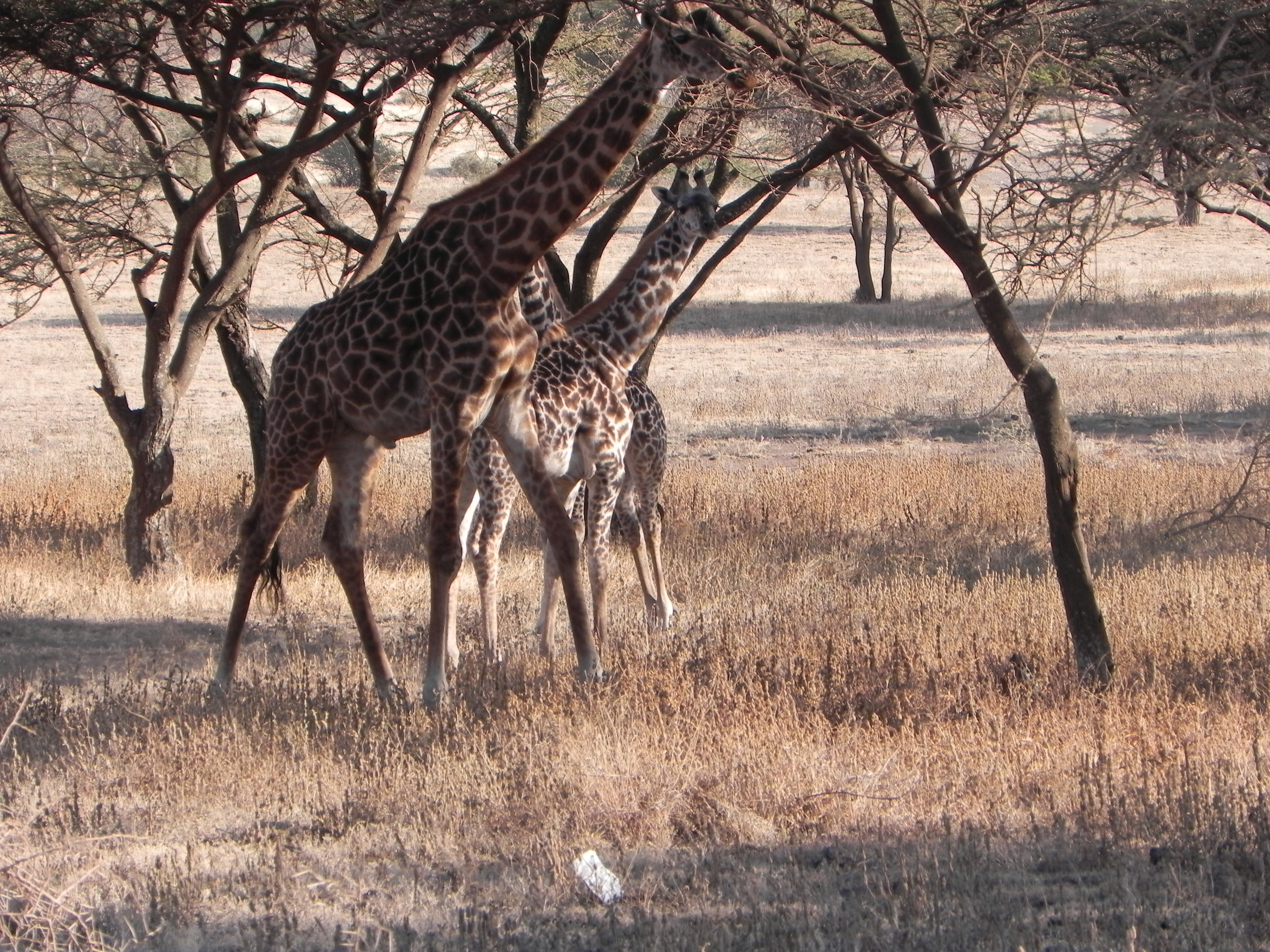
Twiga (giraffe)

Visiting the Serengeti is something I always dreamed of doing but never knew if I would actually do – much less spend the night there! I was told when I came to Africa to come with no expectations, but I have to admit that I had pretty big expectations in my head surrounding the Serengeti – and every expectation was met!

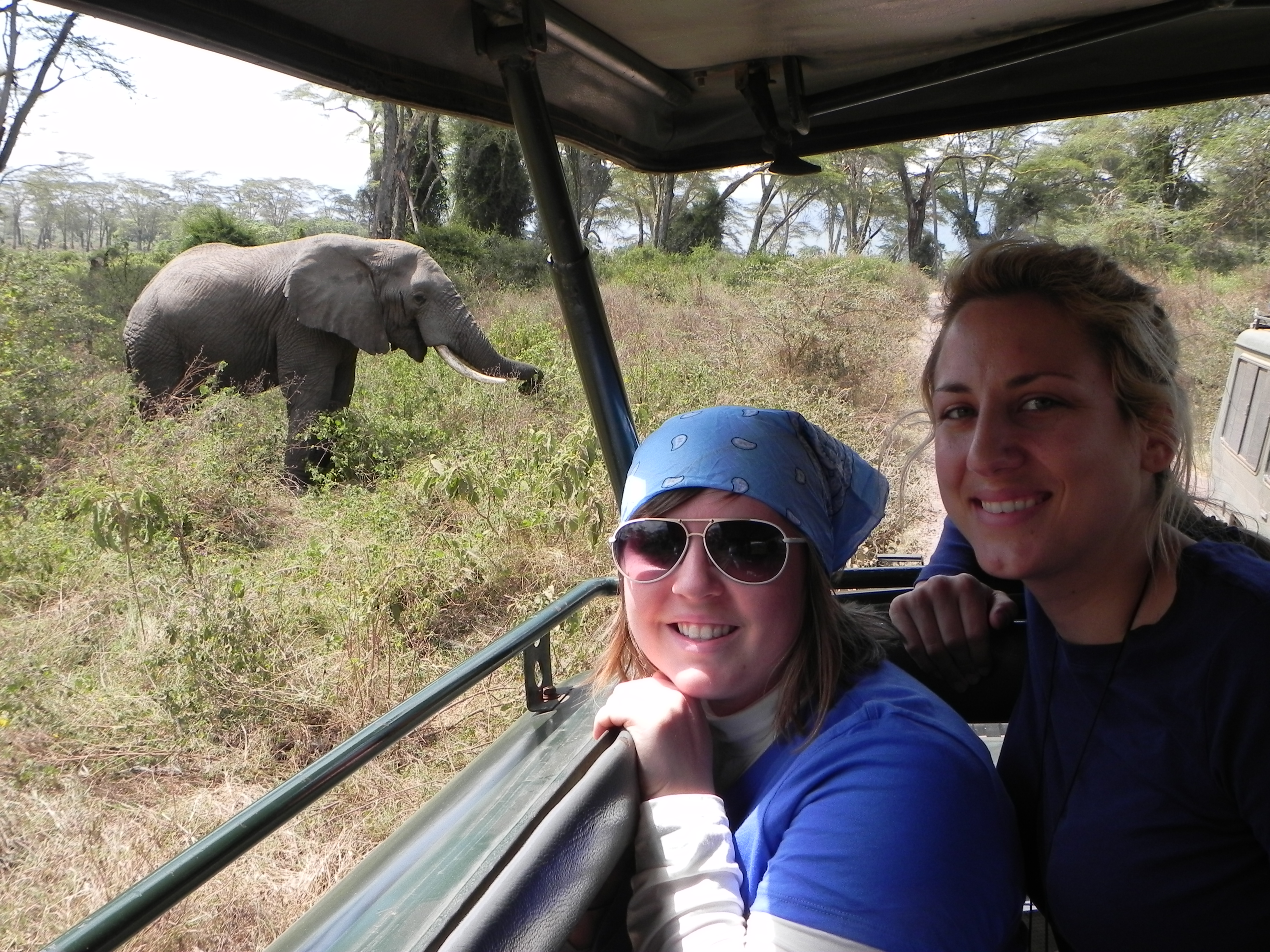
We had literally not been in the park for more than a minute when we saw a cheetah feasting on a recent kill. We spent our days driving through the park peering out the roof of our Land Cruiser looking at lion cubs, crocodiles, wildebeests, leopards dragging their recent kill into a tree, elephants nursing their young, giraffes, zebras, baboons, gazelle, dik diks, and bustards (yes, those last two are actually the names of real animals we saw).

We spent our nights eating dinner in a large tent by candlelight. We had game meat for several of our meals (Thompson‘s gazelle, impala, and some unknown creature called a wildecow – all are actually very tasty, tender, and taste like beef). We slept in what I would call luxury tents. We each had a queen sized bed with a mosquito net and an attached private bathroom. The staff was so quick to boil you water for a warm shower, and the toilets were the most sophisticated outhouses I have ever seen!

Probably a tie with the animals for the most amazing sight I saw on that trip was the stars. I don’t know that I have ever seen so many stars at once – a sea of glittering diamonds across the sky. There is something so serene and peaceful about sleeping outside. The cool night breeze mingled with the calming harmony of insects singing their good nights made for the best nights’ sleep I had had since I arrived in Africa. Even the occasional hyena cry rght outside our tent couldn’t keep me up for long.

Could anyone ask for a better birthday present? It was the most memorable birthday in my 29 years 🙂

On the way back from the Serengeti we made two really interesting stops. First stop was the Shifting Sands, which are aptly named. The Shifting Sands is a large black volcanic ash sand dune that they have been recording movement of since 1956. The whole dune is moving! Erosion and deposition has caused the dune over to move 2 to 5 meters a year. Another strange fact about the dune is that the sand is magnetic!

Oldupai Gorge (often incorrectly called Olduvai Gorge) is called the cradle of life. This is where the first discovered specimens of Homo habilis have been found. Besides the bones there is also stone tools, marks, and a building site. The Museum of Oldupai Gorge contained some interesting paleontology exhibits. One is a photo and cast of the footprints discovered by Mary Leakey at Latoli that evolutionists think might establish a link between humans and primates.

Comments (1)

A Thin Line Between Culture and Oppression

Maasai woman with her child

The morning after we left Ngorongoro crater, we drove to visit a Maasai village. I felt very conflicted after my visit there.

There are many things I admire about the Massai. They leave a very small ecological footprint. They use no electricity, do not clear land to grow crops, and do not eat wild game animals. They move their villages every few years and this helps ensure that they do not overuse any one area of land. They have a respect for nature and the village we saw was kept very neat with no littering or waste strung about. The way they dress is beautiful and they make gorgeous beaded jewelry that you can find all over Tanzania. When we arrived at the village they were so welcoming. They invited us in to their homes to see how they slept and worked. They sang beautiful songs and performed graceful dances for us.

However, as a self-proclaimed feminist, there were some things I just could not get over. I wanted to approach their way of life through a cultural lens, and to try to be open minded about everything I saw, but as a 21st century female I couldn’t help but question: Where do we draw the line between culture and oppression?

The men spend months at a time away from their wife and children going out into nature where they eat and smoke meat, bringing some of the meat back to their families. In the mean time, the women watch the children, tend to the homes, gather food , water, and wood, make clothes for their family, and create jewelry to sell (their biggest source of income). As I mentioned earlier, they are a nomadic people and whenever they set up a new village the women are responsible for building the homes. The women sleep in the home with the children (and they keep their family goat in the house with them too!) .

While the women are the ones who make the jewelry, the men are the ones who get to go to town to sell it. Because they travel to the cities, all the men know how to speak their tribe’s language as well as Swahili and English. All the women we met had only ever learned the tribe’s language while all the men spoke English and they were the ones who led us on the tour.

The Massai are a group who participates in circumcision ceremonies. They start at the age of 15 or later. While the government has banned the Maasai from circumcising women, they still engage in the practice with men. Men are not allowed to scream, cry, or even flinch when the circumcision happens or they will never be considered a true man in the tribe. They will not be allowed to get married or have children.

We also visited the Maasai kindergarten school which brought a whole new set of concerns. The Tanzanian government has required the Maasai to send their children to school. This was a conflict for a while, due to the Maasai believing this conflicted with their tribal beliefs. All Maasai children now attend kindergarten through 7th grade. They will learn Swahili and some English.

The “school” we got to see was a small shack with four walls and no floor or ceiling. The walls were made with sticks with large holes in between the sticks causing dust to fly in the classroom getting in the students’ eyes. The only resources the classroom had was a small chalkboard and chalk. The students sat on the dirt floor on small logs. The classroom was by far the most pitiful classroom I have ever seen, but it’s condition paled in comparison to that of the children.

Oh, the children! In the kindergarten there were about 20 or so students ages 2 to 8. They were covered in dust and dressed in dirty, hole-filled rags. It was clear that many of the children were in desperate need of medical care. They were so excited for our visit, clinging to our hands, each eagerly reaching out for a hand-shake, high-five, or hug. They were so curious about the clothes we were wearing. One child was so fascinated with the zipper on my fleece I could not get him to turn around for a picture because he kept incessantly zipping the zipper up and down.

I became angry. The adults in the village were so clean and well – kept. They were dressed in their colorful garb and covered with their elegant beaded jewelry while their children were covered in grime and tattered rags with their noses dripping and eyes crusted closed.

I spoke with some native Tanzanians to get their perspective on the Maasai women and got two very different responses. One woman, who was born and raised in Tanzania but now resides in the United States, found the Maasai lifestyle liberating for women. They were able to run the household as they pleased without men meddling in their affairs. Another woman I spoke with, who currently is living in Dar, felt very much the same way I did, and when we visited the village she was questioning the women on their ways of life.

A large part of traveling is learning to step out of our comfort zone and recognize that our ways are not always the norm. But when does justifying actions as “culture” become oppressive?

Comments (2)

Ngorongoro Crater

Today we drove to the Ngorongoro crater. On our way we stopped to eat lunch at Snake Park. This reptile park reminded of a reptile park you might see in the states with the exception of the insane amount of venomous snakes on display – snakes that are all found in Tanzania! Some of the snakes (such as the black mamba) have been known to kill people in a matter of minutes!

After the snake park we visited the Maasai Culture Museum. It was an extremely fascinating visit. The Maasai are people indigenous to Tanzania. They live off the land as hunters and gatherers. They are a nomadic group, building a village and using it for a few years before they move on to another area and rebuild their village. They do not hunt the wild game animals found in the national parks (such as zebra, lions, wildebeests, etc.). If you have ever watched Travel Channel’s show Bizarre Foods when they visited Tanzania, then you might know one of their diet staples – coagulated cow blood mixed with milk. Yum!

On our way out of the museum there were camels you could ride for 1.000 shillings (about .60 cents US). Riding a camel proves to be much more challenging than riding a horse! Then it was off to the crater.

I find it interesting that while many people have heard of Serengeti National Park, few have heard of Ngorongoro crater. I was one of those people before this trip.

The crater is located in the East African Rift Valley. For you non geology majors out there, this is an area that has diverging plates underneath it, which causes volcanoes to form. Most of the volcanoes are inactive now. The Ngorongoro crater is an inactive volcano that has collapsed forming a huge crater called a caldera. The crater has been made into a national park and has become a haven for all kinds of animals including zebras, elephants, wildebeests, water buffalo, warthogs, lions, ostriches, hyenas, and hippos to name a few (and we saw all of those animals peering out from the roof of our Land Cruiser!). The park is not closed off and so animals are free to roam in and around the park as they please.

The Maasai tribe shares the crater with the animals. The Serengeti was originally home to many of the Maasai, but when the national government decided to declare the Serengeti a national park the Maasai were asked to leave. They were told if they moved to the Ngorongoro crater they would never be asked to leave, and so they accepted.

That night we stayed at the most beautiful lodge that rested on the rim of the crater. As the sun set we could sit on the deck of our hotel and peer down into the crater through our binoculars looking at herds of animals grazing. It was an amazing end to an amazing day.

Leave a Comment

Hiking in the Rainforests

We went on two different hikes today. The first hike was through the rainforests below Mt. Kilimanjaro. Along our hike we passed by several small caves built in to the sides of mountains. The caves were built many years ago when the Maasai and Chaga tribes (both groups of people indigenous to Tanzania) were at war with each other. The caves were used by the Chaga to hide in and store food and supplies.

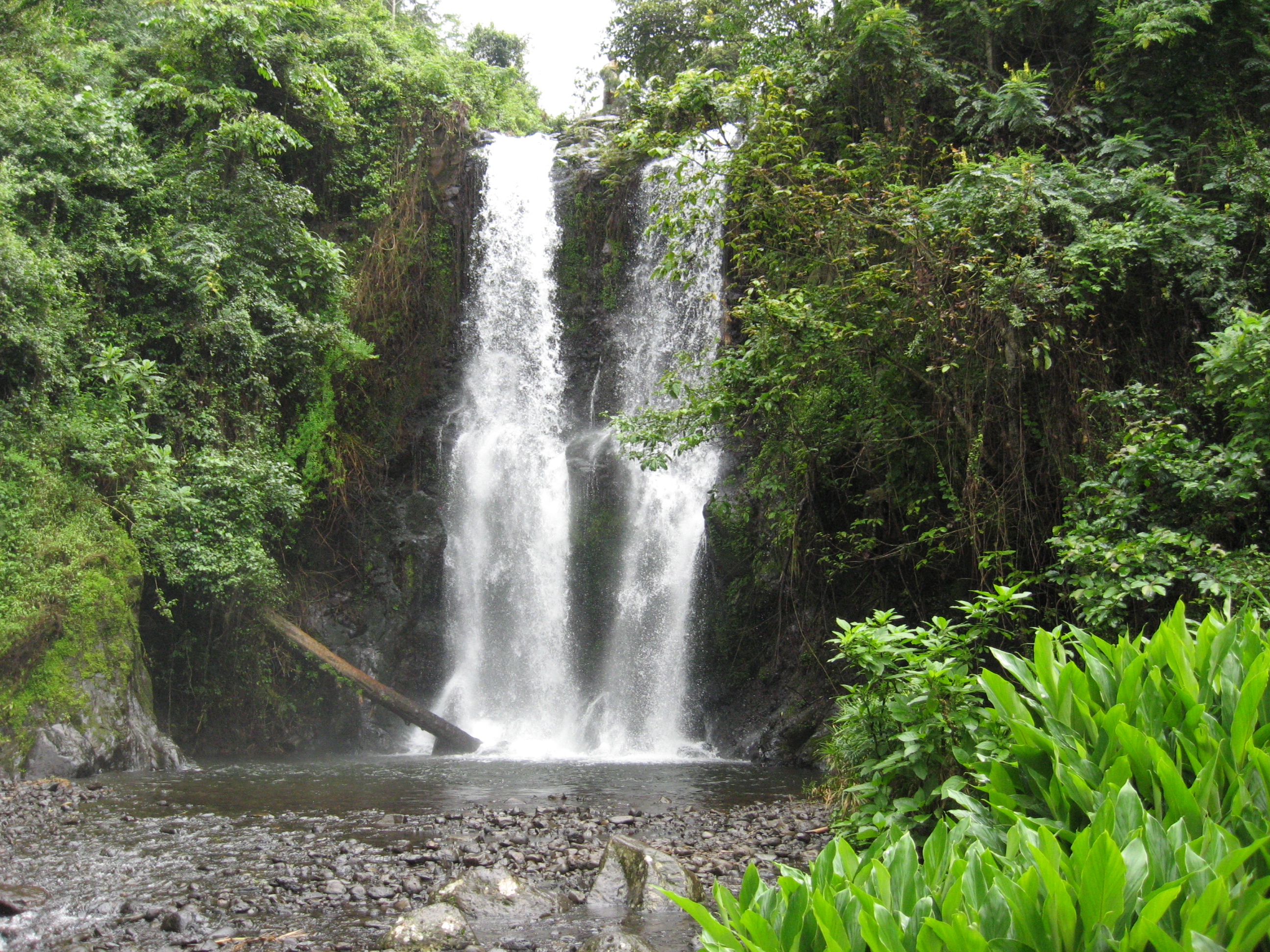
At the end of our hike we reached the most beautiful waterfall. At the top of the waterfall was the statue of a young girl. The story surrounding the girl is legend in the Chaga. In the Chaga tribe chastity prior to marriage was very important. If ever two lovers were discovered to violate this vow of chastity, they would be placed one on top of the other, and then a spear would be thrust through both lovers into the ground. One girl, while not caught in the act, discovered she was pregnant and had to flee her village. When she left her village she was pursued by a leopard. Running as fast as she could, she did not see the cliff ahead of her and fell off to her death. The statue at the top of the waterfall is in remembrance of her tragic end.

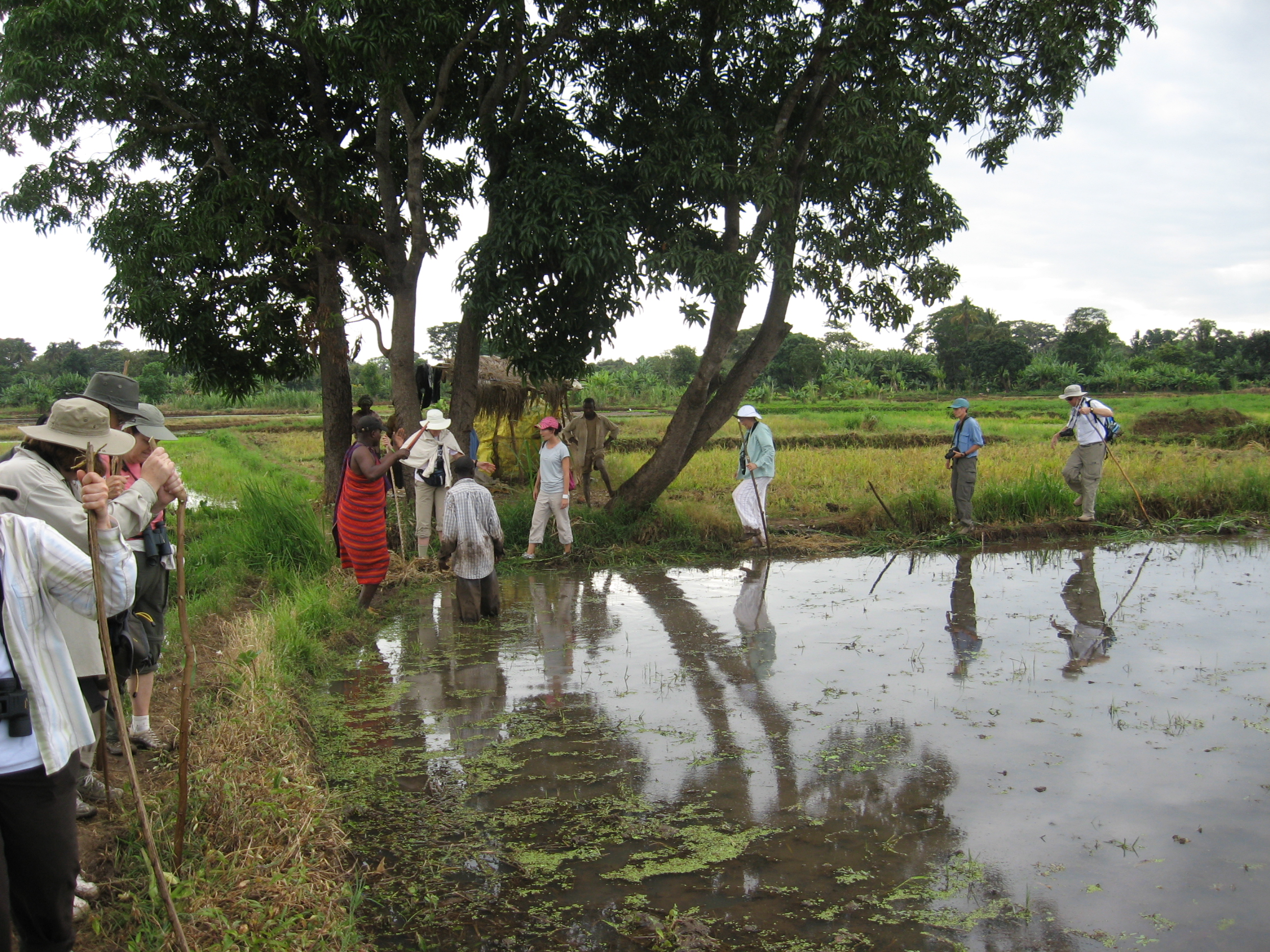
Our second hike was like no other hike I have ever been on! While some of our group members chose to rest at the hotel, a group of us went on a supposed 2 hour hike with a Maasai guide to see colobus and blue monkeys in a forest near our hotel. At the beginning of our hike, our guide used his machete to cut down some tree branches and make walking sticks for each of us. Some group members refused the sticks, and I almost did too – I have done a bit of hiking on my own and didn’t really feel a stick necessary. He worked so hard to make all of our walking sticks and was so insistent I take one, I felt bad refusing. If I only I had known how grateful I would be that I made that decision later that afternoon!

The hike started out quite ordinary, our guide pointing out different types of plants and animals as we went. And then we arrived at the rice plantation.

It was absolutely gorgeous and very peaceful. Water fowl gracefully floated across the water, insects made their calming chirping sounds, and we were surrounding by rich, lush, tropical vegetation. It was the essence of tranquility – until group members started falling in the rice plantation.

I don’t know how many of you readers have ever hiked through a rice plantation, but let me tell you it is no easy task. The rice is grown in dark murky water with unknown creatures swimming in it, and so you have to walk on these tiny lines of muddy dirt between the rice patches. The dirt line was already thin and slippery to begin with, and on top of that some of the pathways had been washed over with water. This is where the sticks came in – you used them to pole vault yourself over flooded over pathways. It sounded fun to me, until my stick almost snapped in half under my weight on my first pole vault. Needless to say, over half of our group fell in the water at least one time. I managed to escape unscathed and good thing too – our guide found a black mamba in the water!

Again and again I am blown away by the friendliness and generosity of the people here. As our group attempted to make our way through the rice plantation, the workers there were quick to come over and lend a helping hand. They quickly gathered brush and tried to cover the flooded over pathways so we could walk over them. In return, we provided the day’s entertainment for them. I am sure we were quite a spectacle to see, falling in to the rice patties and screaming loudly when even a toe dipped into the waters. The rice plantation workers waded throughout the fields barefoot. Several of the women working in the field were in hysterics by the time we left. I am sure their families that night got a good laugh out of us too.

Luckily, the trek was worth it. The monkeys were amazing to see. After our initial rice patty experience, our guide wisely decided to take us on a new route home. We ended up walking through several villages. Our guide said it was highly likely that some of the children in these villages had never seen a white person before – and I think he was right. An adorable girl, who couldn’t have been more than 2 teetered to the edge of the fence outside her house to peer at us. One of the women in our group called out a cheerful “Hello”. The girl immediately burst out into wailing tears. As we walked further into the village we saw around 15 children playing ball in the street. Upon seeing us they all began screaming and running to the houses. Almost immediately we would see little faces pop into the windows of the homes curiously watching us parade through the town.

All in all, our “2 hour” hike took over 3 ½ hours.

Comments (3)

Africa’s Colonial Legacy

The afternoon after we visited the schools we attended a lecture on Africa’s colonial legacy given by Dr. Martha Murayo of Mwenge University and College of Education. She and one of her students talked to us about what lasting effects, both positive and negative, that the imperial powers (Belgium, England, Portugal, Germany, and France) left with Africa after colonization was over.

They focused on two main theories surrounding this issue: Modernization Theory and Dependency Theory.
Modernization Theory explains that the imperial powers came to Africa to “modernize it” in a European way, or to “civilize” Africa. This begs the question “what does it mean to be civilized?” Our speaker summed it up, and I agree, as the ability to live among each other. The imperial powers failed to recognize that many tribes already had sophisticated norms and rules among their society, and did not need to be “civilized”. Dependency Theory (also referred to as underdevelopment theory) refers to Europeans wanting to exploit African countries to develop their own countries.

Even though colonization began around 1920, understanding the legacy of colonialism is essential to understanding the culture, economy, and people of Africa today. Poverty across the continent is a major problem, and largely African economies have not been able to find their own power. Our speaker described it as a “set light” effect. The moon has a “set light”. When we look at the moon it appears to glow, but really the moon receives all of it’s light from the sun. This is much like many companies that appear successful in Africa. Coca Cola has a thriving business in many countries in Africa and practically everywhere you look you will see advertisements for Coca Cola. However, where is the real producer of Coca Cola located? The U.S.A. of course! When will Africa produce it’s own light?

African raw products (such as tea) are sold to the United Kingdom and other countries where they are processed, packaged, and then sent back to Africa and sold for a much higher price.

Our speaker also described many of the continent’s economic problems stemming from Africa adopting western tastes, but without western skills. They have adopted western consumption patterns, without western industrialized techniques.

One of the things that I found most interesting, was when the speaker addressed colonialism’s effect on tribal war. I feel that many people in our world have heard little about Africa except hearing on the news the violence that happens between different tribes who are at war. Our speaker told us that tribes were really not tribes at all, but rather most would describe themselves as independent nations, so when the imperial powers showed up and created new boundaries, splitting some tribes lands in half, or forcing some tribes to move off of land they had lived on for generations…..well, one can see where serious complications arise. The imperial powers also imposed “divide and rule” where (to prevent uprisings) they purposely turned tribes against one another.

The lecture ended with several discussion questions which I still don’t have the answers to. How come other countries who were colonized (such as India) have been able to become industrialized while Africa has yet to “find their own light”? Why is this information not taught in schools today? Where does the slave trade fit in to this discussion?

One thing that really stuck with me after the lecture was the way the presenters spoke about these issues. If my ancestors had faced such hardships I think I would be very bitter and hateful toward the people who had done these things to me. While our speakers recognized the harsh realities surrounding their past, they did not present the lecture from an angry perspective. They even pointed out some positive effects of colonialism such as public school systems and modern medicine. Would Africa be in a better place without colonialism? Probably. But we will never really know. What we do know is we must deal with our current reality, and one way to spread light on this issue is to educate people about colonialism. Sitting in on this lecture made me wish I had taken a graduate school course on colonialism. Fascinating! Feel free to post your own questions and ideas below!

Comments (2)

Revisiting the Schools

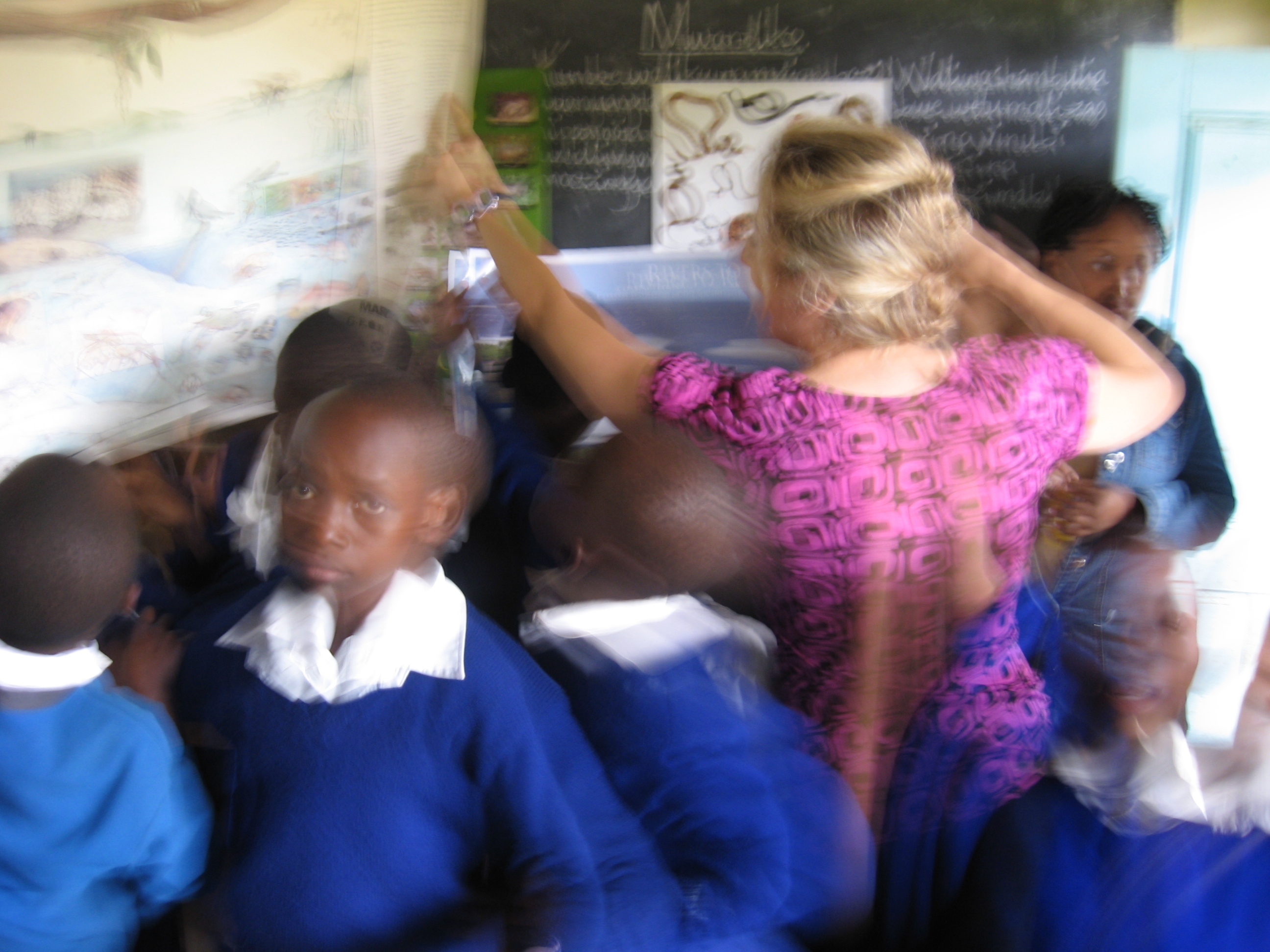
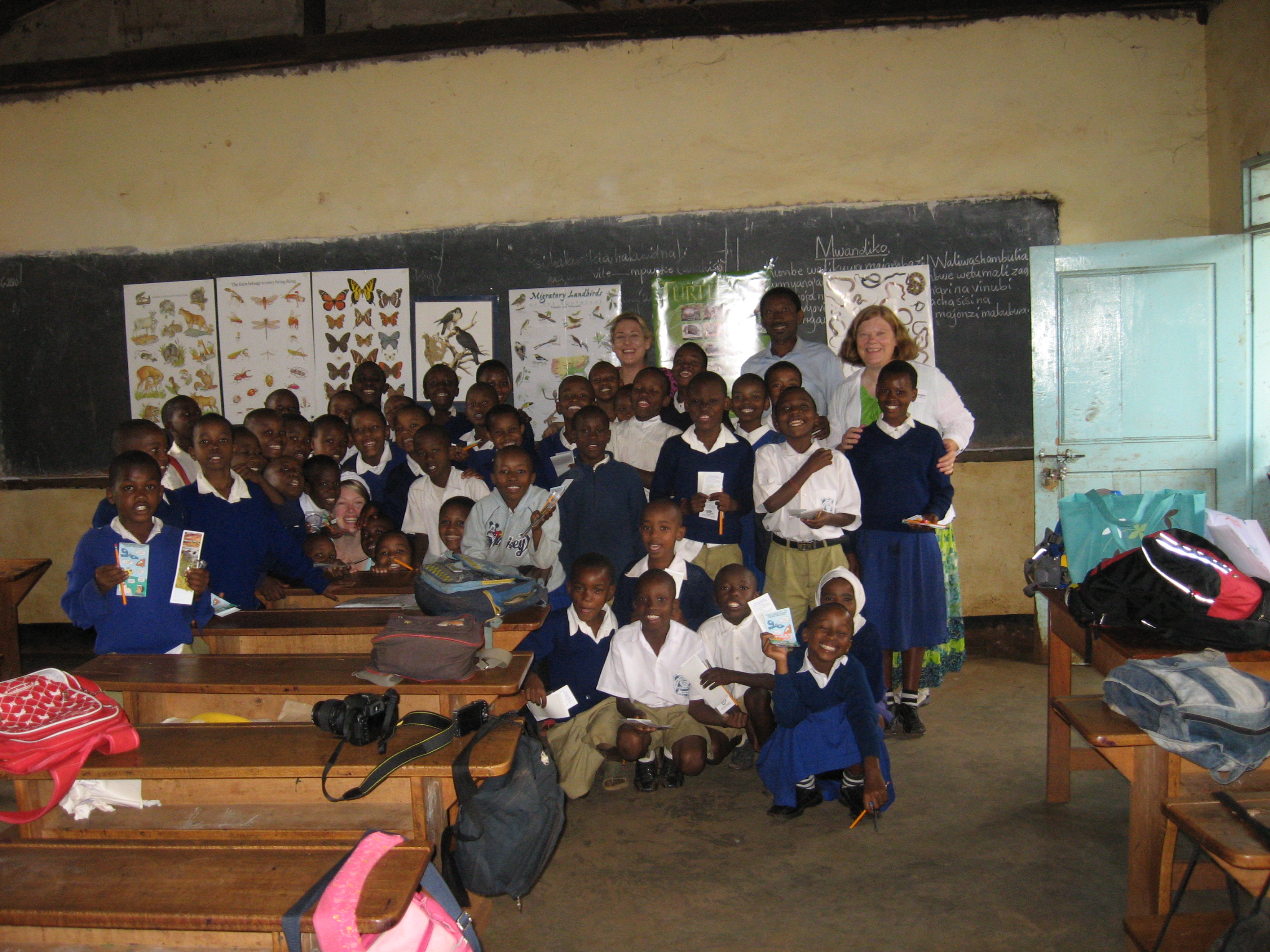
Showing children posters we brought for their classroom

We returned last night from four nights at the Ngorongoro Crater and the Serengeti with no internet access, so I will have to play catch up in my next few entries. I will start with our return to the primary school in Moshi.

There are a few days in your life that you know will have changed some small part of who you are forever. Those are the days that you just do not remember the events that took place, but the emotion you felt imprinted on your heart. Today was one of those days.

We returned to the school to teach a lesson. I was assigned with two other teachers to a 4th grade class. We had a little over 40 students who did not speak English. We introduced ourselves and showed them a world map to show where we were from and where it was in location to Tanzania.

I love singing songs with my 4th grade class in Athens, so I thought it would be fun to teach them a few songs in English – Head, Shoulders, Knees, and Toes and the Hokey Pokey. They already knew those songs and so they taught US how to sing them in Swahili! We ended up teaching them one of my classroom’s favorites – The Banana Song (or Wimbo Ndizi in Swahili!).

We gave the students index cards to write notes to our students back in America. I can’t wait to read over all of them! Despite the language barrier, the students participated in the lesson with such gusto. Their enthusiasm was contagious. Each child wanted so badly to put their whole heart into what we were doing.

Before we left, we each brought the students some simple gifts – gum, pencils, pens, bracelets, candy, etc. I was overcome with emotion by how grateful and excited the students were for each gift. They cheered and clapped with such thunderous applause for each present, you would have thought that we were giving them gold and diamonds. I felt incredibly selfish as I passed out the gifts – instead of worrying about cramming in that extra change of clothes for my trip, why didn’t I cram in more things for these children and their schools?

Visiting the school that day reminds me of why I love being a teacher and how much more I have to give not only the children of my school, but the rest of the world. Tears stung my eyes as the bus pulled away that day, wishing I could do more. The gifts exchanged that day seemed so unequal. I felt there was so much more I could give, and yet every child at that school was so quick to give me everything they had.

If you were as inspired by the story of these children as I was by spending time with them, you can join me in trying to send supplies to this school. I am hoping to start a pen pal program with my class in the fall and send boxes of supplies with the letters. The school could really use and supplies – from small ones such as pens, crayons, and paper to larger donations like computers.

Principal: Christopher J. Akaro of Moshi Primary School
P.O. Box 8446
Moshi, Tanzania

Comments (3)