Archive for July, 2010

Habari za safari?


A wise woman from Ethiopia at the beginning of our journey told me, “Africa is everything you see on TV and it is not everything you see on TV.” Throughout my weeks here, the meaning of those words has slowly come to fruition. It seemed to me prior to this trip that most descriptions of Africa on TV portray two things – extreme beauty and extreme poverty.

It is true, Africa is full of these images. But the beauty is more vivid than you could ever capture on a camera. The poverty more palpable in person than it could ever be through the picture on a screen.

The beauty transcends color, texture, and shape. It is a beauty felt deep within in your heart. Its splendor is wonder recaptured that was once lost in childhood. The beauty resounds in the snowy peak of the elusive Kilimanjaro, the glint of sun radiating off the rows of majestic sunflowers in the morning sun, and in the twitch of the cheetah’s tail as she patiently cowers in the grass stalking the wary swala. The spirit of the people – the sound of the children’s laughter and song, the smiles of men and women as they dance to the rhythm of the djembes, and the excited cheers of soccer fans uniting for team Ghana to be victorious in the World Cup – inspires my soul.

Poverty has never seemed more real. One cannot click the button on a remote and change the scene of a hungry child on the street when they are sitting in front of you looking into your eyes. When you are standing in a place that at one time seemed a world away, your universe suddenly becomes so much smaller. The interconnectivity of the human race hits me like a thousand bricks. I am simultaneously struck by the beauty and power of the human spirit as well as the pain. When one small soul is hurting, so are we all.

Largely what makes this world that we live in so amazing is its many different people. We can choose to live our lives in the ordinary, or we can choose to be capable of feats of great strength and vision. What could we accomplish if we all reached out of our comfort zone? If we all took a moment to realize how much we all have, and how much more we all have to give? It can be easy to forget how miraculous life can be when we become steeped in our everyday lives. In the eyes of the children I met, I saw those miracles I had forgotten existed.

To think more deeply, critically, and globally, to live my life with more compassion, to not give up the fight for others simply because my life is so easy, to learn more about this world and the lives of people in it beyond my own sphere, to realize what a small but important part I play in this grand universe – these are lessons I humbly take with me from this adventure.

When we hear the word safari we typically think of a person traveling to Africa dressed in their khakis and vest, armed with binoculars ready to snap shots of rhinos and lions. In Swahili, however, “Habari za safari?” literally translates into “How is the journey?”

To answer my own question – I think my journey has just begun….
Leave a Comment

A Bittersweet End

Our last day in Tanzania we visited an orphanage. Many of us donated some or all of the clothes that we brought with us on the trip (after all, I had bought myself practically a whole new African wardrobe!). The orphanage housed about 15 children, but around 38 children spend time at the center in order to receive food and companionship.

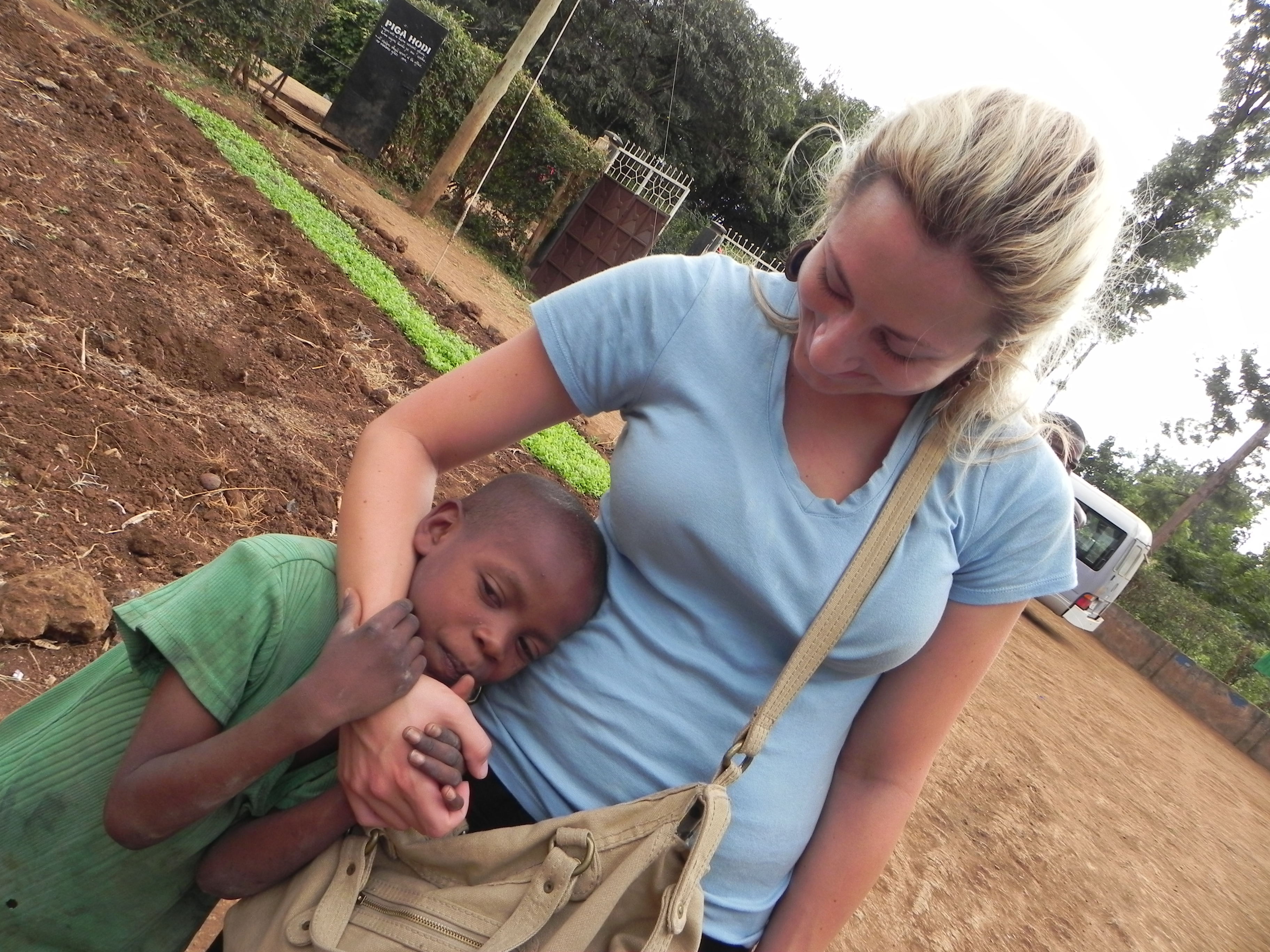
The children, as always, were warm and welcoming. Immediately after stepping off the bus, a small girl was in my arms, eager to hold my hand, play with my hair, and hug me. The staff told us they were in desperate need of food, and struggled weekly to feed all of the children. At one time, the facility was sponsored by a generous donor, but because of mismanagement, the donor pulled their support. Now, sometimes children receive one meal that is supposed to keep them nourished for the whole day. At one time, there was no adult staying with the children overnight at the orphanage.

The children put on an acrobatic performance to show their appreciation for our visit and donations that day. They had phenomenal talent – from contortionists to accomplished gymnasts it was hard to believe all the skill they possessed was self -taught. The vitality and energy of the children melted my heart. I found myself again in tears when it was time to leave. It is so incredibly unfair. I was born into a family were all my basic needs were always met. I always had food in my belly, a roof over my head, clothes on my back. Most importantly , I had parents who loved me and gave me all the emotional support I needed. How are so many of us given so much, while others are given so little?

Oh Lord, please help me to remember how blessed I truly am. Please help me to not take so many things for granted anymore. Please help me to have a more giving and serving spirit.

These children deserve more from our world.

Comments (2)

Spice Island/ Prison Island

on the spice tour

I think my most treasured memory on this trip was interacting with the children and visiting their schools. However, this day might be a close 2nd. Zanzibar is also known as the Spice Islands, and we started off our day with a spice tour.

In route to the spice tour we stopped off at one of the Sultan’s palaces. Most of the palace had been burned down in a fire, but you were able to walk through the ruins. This palace had been used by the sultan for his concubines. It was filled with toilets, hot baths, and rooms for massage.

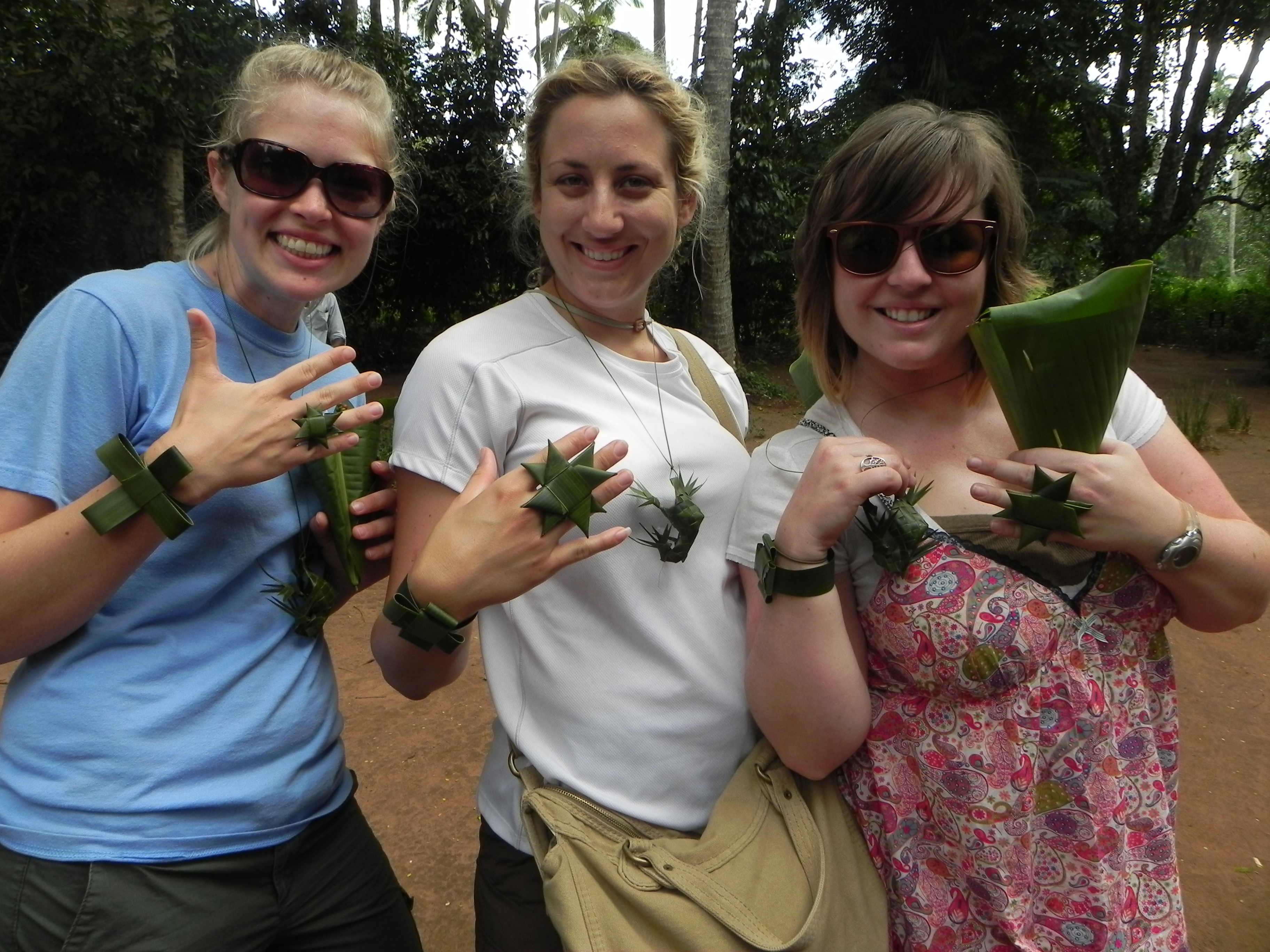
The spice tour was just amazing! We saw cardamom, cloves, lemongrass, cinnamon (did you know cinnamon root smells just like Vick‘s Vapor Rub?), curry tree, pepper vine (apparently all varieties of pepper are from the same plant, but are harvested and prepared differently), jack fruit, bread fruit, yummy star fruit, nutmeg, some plant that the leaves are used to make lipstick locally, among many others! Throughout the tour our guides showed amazing dexterity and skill, creating bracelets, rings, neck ties, and frogs for us – all out of banana leaves! At the end of the tour, we got to try a bunch of different kinds of fruits, many of which we do not have in the U.S.A. including custard apple, a fruit that looked just like litchi fruit, but was not litchi, HUGE grapefruit (and the best tasting grapefruit I have ever had), some kind of fruit that tasted sort of like a cross between a banana and a pineapple, and several others.

That afternoon we took an excursion out on a Dhow boat (small wooden boat) to snorkel in the Indian Ocean on a coral reef. It was beautiful. There were many vibrant colors of coral. We saw giant clams, clown fish, brain coral, and countless other sea creatures I don’t know the names for!

After snorkeling, we boated out to Prison Island. This island was originally used as a quarantine center. It now hosts a beautiful hotel. The hotel was currently closed and under renovation, but our guide, Mohammed, told us that there were giant tortoises on the island to see. In my head I pictured a few tortoises roaming around. We would stand from a distance and snap a few photos – boy was I wrong! Not only were the tortoises HUGE (some on the island were over 100 years old!), there were tons of them, and they were friendly to people. We were able to hand feed them – and they love it! As soon as you walked over with a leafy green in your hand, the tortoises would race (ok, maybe more like waddle) towards you, eager for a treat. They let you pet them, and were really quite cute in a scaly, cold-blooded type way. We literally had six or seven tortoises surrounding each of us patiently waiting to be fed. Too cute!!!

After feeding the tortoises, we wandered through the hotel grounds, reading about the history of the island. We watched the sunset on the beach, with the clear blue waters tickling our toes as they dug in to the white sand.

As we set sail on the boat ride home, with the sun sinking behind the horizon, and the lights of Stone Town coming in to view, I had one of the quiet, peaceful moments were all feels right in the world. I knew I was having the moment of a lifetime, and I hope I will be able to hold on to the feeling of that memory forever.

The morning before we left we visited the Jozani Forest. We went to the forest to see the Red Colobus monkeys. Zanzibar is the only place in the whole world where they can be found! The monkeys were absolutely adorable, and very fun to watch. The most amazing part, was how completely unaffected they were by our presence. I would be literally no more than one foot from a monkey taking a picture while she would nonchalantly chew on her food and scavenge the ground looking for more to eat.

All in all, I found Zanzibar to be a stunning, fascinating, and exotic place. Momma Moshi always jokes each year with her students that she has to hire extra security to make sure all her students leave the island – and I can see why! Luckily for me, whenever I close my eyes, I can hear the busy sounds of cars, street vendors, and children playing in Stone Town, I can taste the sweet fruits and spices of the spice tour, and feel the sun warming my back and wind racing through my hair on the Dhow – these all are the best souvenirs anyone can ask for.

Leave a Comment

Schools in Zanzibar

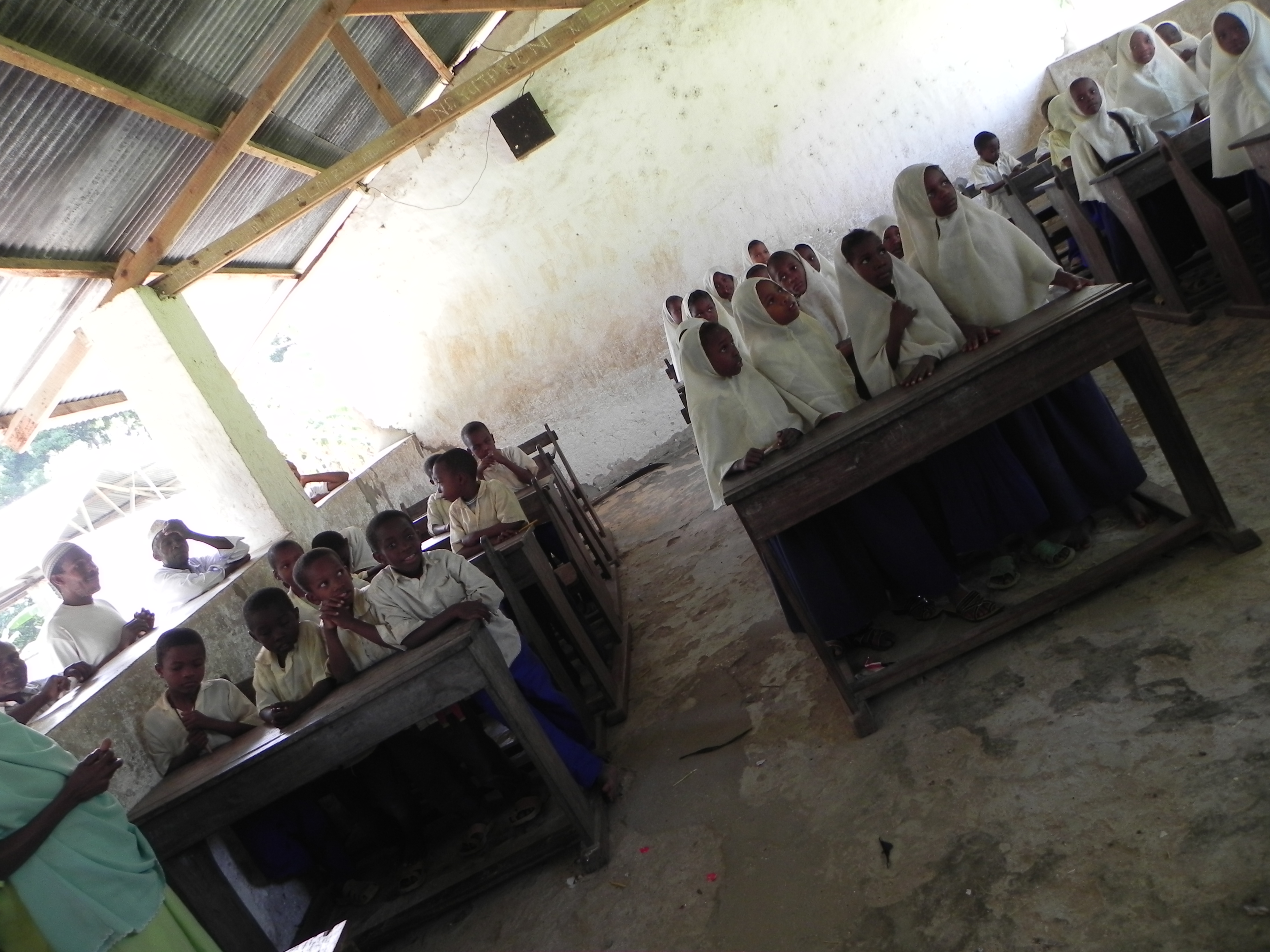
Primary Classroom

The next day we visited a primary and secondary school and had lunch with the Ministry of Education. Our guide that took us around to the different schools was one of the most amazing women I have ever met. Dr. Sira runs a center for women and children. Her center offers programs that benefit women and children, and she does many outreach programs, such as voter training classes (and we attended one!). Representatives from different villages met and were trained on the election process, and why voting is important. They then went back to their communities to help officiate the process there. Our meeting with Dr. Sira at the women’s center was taped, and we ended up on the evening news in Zanzibar that night!

The schools we visited were very similar to many we had seen in Tanzania with one large exception – there was a one student to textbook ratio. The Minister of Education said this was a large priority for him. Our group was curious how Zanzibar had managed to pull off this feat, when schools on the mainland had 20 students to one textbook. This school year the government had also made kindergarten mandatory. The funding for this program is still lacking considering that the kindergarten class at the primary school we visited had no chairs for the students to sit on.

The principal at the primary school was desperate for teachers. They were extremely understaffed, with several teachers working at the school on a volunteer basis. It twisted my heart, as we left he grabbed each of our hands, looked imploringly into our eyes and asked us if we would be willing to come back and teach. The school had a Peace Corp volunteer the past two years who had set up their computer lab. The principal was an adorable older man, with salt and pepper hair and eyes that glittered with kindness when he smiled, which was often. “ I love Americans!” he excitedly cried, “When we had the gentleman from the Peace Corp here, we became really great friends. If you came here too, I would be good friends with you too!” Dr. Sira even offered us a home she had near the school for anyone who came to teach to live in for free.

I left the school that day feeling what I had felt so many other days in Africa, lucky for all that I had, sad that I could not do more, inspired by the efforts of the children, community members, and teachers.

Leave a Comment

Zanzibar

Whenever I first heard we were going to Zanzibar it conjured up visions in my head of palaces, clear blue seas, cloves, and Arabic music. Zanzibar did not disappoint. From the moment we stepped off the ferry ride from Dar, we entered a new world. The Arabic influence is easily seen throughout the island, and the scenery was nothing like anything else we had seen so far in Tanzania.

For those who don’t know, Zanzibar is a group of small island in the Indian ocean off the coast of Tanzania. It is a part of the Republic of Tanzania, but at one time was independent. It has its own government system (including a president) and the capital is located on the biggest island of Zanzibar, Unguja, in Stone Town, a World Historic Site.

Walking down the street in Stone Town, I felt like I was in a movie. The buildings are built extremely close together, creating a maze of alley ways so tight that many cars cannot drive through the streets there. The buildings have a mixture of Arab, Persian, Indian, and African architecture. Many of the doors to the building are huge with dark wood and ornate carvings.

In Stone Town we visited the market place, which was a very interesting experiences. We wound through streets and alleys full of people hawking their fruits, vegetables, spices, chickens, meat (VERY freshly slaughtered), and seafood. Let’s just say after that venture I am pretty sure returning to vegetarianism is in my future (and I might be cutting out seafood too).

While there, we also got to see the famous Durian, more commonly known as “stink fruit”. Also seen on Bizarre Foods, this fruit gets its name from the very distinct sewage – like smell the fruit emits when cut open. The smell is so pungent, that the fruit is not allowed in some public places like buses or public buildings. Despite the strong stench, the fruit apparently has a great taste. This leads me to wonder, what conversation transpired the first time this fruit was tried?

Man 1: What is this strange fruit?

Man 2: I don’t know, but when I cut it open it smells awful – just like feces!

Man 1: Oh, well we should definitely try it then.

Man 2:: Your right, with the smell of raw sewage, it must taste really good.

What????????????????????????????????????

We also visited the House of Wonders. This building was built in the late 1800s by a sultan. It was meant to be a ceremonial palace and reception hall and showcased modern conveniences like electricity. It now is a museum and culture center. We also visited the Sultan’s palace, which was the home to several sultans before being turned in to a museum where visitors can walk through and see how the sultan lived.

Zanzibar was once an important slave trade site for Eastern Africa. The slave trade was controlled by the Omani Sultans, who later closed the trade due to pressure from Europe. We visited the slave underground holdings, which is where slaves where kept while they were waiting to be auctioned off. Over 70 men, women, and children were stuffed into a tiny cramped room with little ventilation and no food or water. There was a large trench dug into the bottom of the cell for the tide to come in and wash away the sewage that collected.

Slaves were taken from these small cells to a whipping post where they were whipped publicly. Slaves who cried or yelled out sold for a lower price. After they were auctioned off, they were forced on to ships and sent overseas. Even after the slave trade was declared illegal, it continued for many years on Zanzibar.

Several of the churches played a part in trying to abolish slavery on Zanzibar, and so it seems oddly appropriate that the Anglican church was built over where slave auctions where held. There is a small red circle at the altar at the front of the church that denotes where the whipping post used to stand.

That night we attended the Zanzibar International Film Festival which happened to be going on the week we were in Zanzibar. The night’s festivities were held outside in an old fort. The president’s wife attended the screening and we got to see her speak (in Swahili). The film that happened to be showing when we arrived, was actually a film from the United States called No Woman, No Cry. The president of Zanzibar saw the film and insisted it be showed at the film festival. The film explores reproductive health options for women going in to labor in four very different parts of the world, including one woman in Tanzania. I definitely recommend the film if you have not seen it.

After the film festival we headed home to our beach bungalow and fell asleep to the sounds of the Indian ocean crashing on the beach.

Comments (1)

Bagamoyo

Our last day in Dar we drove up the coast to a town called Bagamoyo. Our first stop was at a US Aid primary school that focused on environmental education. While the campus still faced many challenges, such as no electricity in classrooms and an inadequate amount of furniture, it was very different from the other campuses we had seen.

This was the first primary school we had seen with a library! The library was decorated in a very charming way and was bright and appealing to be in. The teachers and students at the school had thought of a creative solution to the scarcity of books to read. The teachers and their class wrote, illustrated, and built large picture books to put in the library for all students to share and enjoy.

The school also had a computer lab with about ten (very outdated) computers. In the lab they had a TV and sets of interactive science videos to show their students. It is amazing how much more these schools can do with just a little bit of money and support.

After the school visit we went by the first Catholic church built in East Africa. We also visited a building that used to house slaves before they were shipped to Zanzibar to be sold. Slaves were taken from all over East Africa and crammed in to small quarters for days before they were loaded on to the ships. Our guide also took us by the spot where any African revolutionary who opposed the German colonizers rule was hung.

That night we returned to our hotel and all gathered around a TV in the hotel bar to watch the World Cup final game. About 675 miles away, in Kampala, Uganda, people congregated at a rugby club and an Ethiopian restaurant to do the same. These spectators, however, would never finish the game. With about ten minutes left in the match, two bombs were detonated in both places, killing over 70 people and injuring many others. The acts are being claimed by a leader from a Somali militant group al-Shabab.

I hate to sound callous, but a month ago, if someone would have told me about these attacks, while I would have thought they were sad, I probably would not have given them a second thought. Today it was a different story. The people watching this World Cup game were not soldiers at war – they were citizens, both locals and tourists alike. Just like us, they sat down to enjoy a few drinks and cheer on the soccer teams. In 1998 Tanzanians experienced similar terrorist attacks – bombings at the US Embassy at Dar es Salaam – just down the street from our hotel.

For the first time, those people who were harmed on the other side of the world – could have been me. Why does it take traveling halfway around the planet to get me to understand the sadness and fear that should be so painfully obvious?

Another lesson learned on this trip – I hope I never again can distance myself emotionally from the pain and terror others experience just because they are distant to me in location.

Comments (1)

Dar in a Car Will Not Get You Far

Our next journey took us on an 8 hour drive to Dar es Salaam. I have been so amazed by the diversity of the land here in Tanzania. In Moshi there are chains of mountains leading up to the climax of Kili. Near Arusha the weather is cool with rows and rows of sunflower fields. Serengeti is a vast grassland.

Dar is a big city (high rises and all!) that rests on the edge of the Indian Ocean. It is hot. It is humid. It is buggy. It has the worst traffic I have ever seen in my life. One of the guides on our trip who lives in Dar has a home that is 14 miles from his work. It takes him 2 ½ hours to get to work everyday – one way. I am sure there is lots to see and do in Dar, however, most of our experiences there involved sitting in traffic. Despite the rush hour traffic that went on 24 hours a day, we did see a few really interesting things during our stay.

Our first day in Dar we visited a village that had a Women’s Initiative Loom Factory. The men and women of the village used the looms to make beautiful scarves, sheets, tablecloths, and clothing. The profits from the sales went toward benefiting the women and children of the village. The looms were an amazing piece of machinery! Watching them work at the looms was incredible. It was a full body workout – using both arms and legs to get the job done. Just to thread the loom took five hours!

Our next day in Dar we visited a village museum that had models of the types of houses people indigenous to the area live in. The homes were built with very different materials from palm leaves, mud, sticks, and even cow dung! I was blown away by the size of some of the homes considering the materials they were made from. Many of the homes had a loft inside. It definitely says something to me about the creativity and engineering skills of the different tribes. I would cringe to see the 5 room house I would attempt to make with just sticks and cow dung. Several of the tribes are polygamous and would have different bedrooms, or even houses, for the junior and senior wife.

I can’t wrap my mind around how different my life could be if I was born in a thatched hut in Tanzania instead of a hospital room in Texas. We all live in the same world just oceans apart, with the same date on our calendars, but we have such drastically different ways of going about our everyday life. Despite experiencing these differences first hand, I find the world has become a much smaller place. Without talking I found many ways to speak the same language with the people here. The laughter of a child, the smile of a stranger, the encouraging nod of a teacher as she helps a student, the gasps in awe as both mzungo(foreigners) and locals alike spy a cheetah on the prowl , all transcend the barriers of language and location. I find my soul hungry to experience more of the world everyday and longing to celebrate what an amazing place this planet we call home is.

Leave a Comment

It’s So Easy…

It’s so easy to turn on the faucet and drink clean water.

It’s so easy to eat food and know it will not make me sick.

It’s so easy to flip on the air conditioning when I get hot.

It’s so easy to live each day without worrying about how a small bug bite might change my life.

It’s so easy to forget how good I have it.

It’s so easy

for me.

Leave a Comment

Never Again

Upon returning to Kigali to wrap up our trip, we met and had dinner with a US Embassy representative. She had spent the past two years in Kigali, and had grown to love Rwanda. I too, found much to love.

The country appeared very clean. Rwanda has become a remarkably peaceful and safe place considering their past, and everyone in our group agreed that Rwandans take pride in their country.

Rwanda also has an extremely efficient and effective system for passing out medication to those living with HIV in AIDS. Even citizens who live in rural and remote areas receive medication on a routine basis.

56% of Rwanda’s parliament is made up of women – this is the highest percentage of women in parliament out of any country in the world!

Perhaps what most touched me was Umugada. The last Saturday of every month all shops and businesses close. From around 8 am to lunch time all members of every community participate in community projects – repairing schools, cleaning up the village,etc.

Despite the beauty of the country and its people, I couldn’t help but still feel the effects of the genocide during my visit. In Tanzania, I have been overwhelmed by the warmth and friendliness of its people. While everyone we met in Rwanda was very polite and kind, there was a radical difference in they way they treated our group. In Tanzania, every person we drove by would wave at us. Children ran up to our cars, shouting loud greetings. In Rwanda, the people kept to themselves.

Each time I saw a person over the age of 20, I couldn’t help but think of the painful memories they possess. We saw many people who were missing limbs – feet, arms, legs. How do they walk alongside people everyday who contributed to the genocide?

Justice has been a complicated process post-genocide. Many judges were murdered during the genocide or fled into exile. In 1997, there were only 50 lawyers in the country! War crime tribunals continue being held in both Arusha, Tanzania and the Hague for more serious war crimes (planners and organizers of the genocide, notorious murderers, those who committed sexual torture and violence, etc.)For less serious offenses, many communities also participate in GACACA. GACACA is a traditional model of dispute resolution indigenous to the area. In the past it was used to solve problems over land, marriage, cattle, or petty theft. The judges are elected by the community. If people admit to their crimes they are given a lighter sentence. Sentences vary from life (very rare) to as little as one year. After their time is served, they are able to return to their communities and live a regular life.

How do you ever learn to trust your neighbor again, when you saw them commit such atrocious crimes? How do you not live your life full of hate, when the very people who harmed your family and friends walk free? Many in the country suffer from depression, anxiety, and emotional/ mental problems as a result. Sadly, Rwanda does not have enough man-power or facilities to help people suffering with these problems.

My trip to Rwanda gave me an understanding for the word genocide that I never had before. While I had visited Germany, the events of the Holocaust seemed so far away, they didn’t hit me with as great a force as they did in Rwanda. To visit a mere 16 years after genocide occurred, and to see the raw emotion and life- changing effects first hand is an experience, while sad, that I am grateful for. The resiliency of the human spirit and the immense strength people have to show forgiveness and go on living their lives humbles me.

Every human has the right to live their lives free of fear and violence. Every person on this earth holds a responsibility to themselves and each other to make sure that happens. Rwanda has adopted the slogan “Never Again” regarding the genocide. The international community turned their back when Rwanda needed them most. It is my hope that with education and greater awareness, the rest of the world will commit to “Never Again” as well.

Leave a Comment

Butare

The next few days of our journey in Rwanda took us to Butare. Butare is a town about 2 hours southwest of Kigali. It is home to the National University of Rwanda, which was the only university in Rwanda for many years. This has made Butare known as the intellectual capitol of the country.

We arrived in Butare July 4th weekend, which ironically, is also Rwanda’s Liberation Day – their own version of July 4th. July 4th marks for Rwanda the day 16 years ago, that genocide ended, and a new government was born. We attended a community celebration in Butare that had live music and dancing. We also heard a live broadcast of the president giving a speech in Kigali. In his speech he honored several people, both living and those who had passed on, that had fought for justice and saved lives during the genocide.

The following day we visited the National University of Rwanda. The university has around 11,500 students and is the only public university in the country. It is the only school in Rwanda to offer a PhD program. It is the largest employer in the nation. Many question what will be the future of the university. Many specialist schools are being consolidated. For example, the school of education has been moved from Butare to Kigali. Also, enrollment at the university is not high enough to finance the school. Many students cannot afford to pay tuition and therefore apply for loans and scholarships. Most loans and scholarships, however, are offered in science or education. Decreased enrollment in many departments has caused them to shut down – including the African History and Language Department.

While at the university, we visited a genocide memorial there dedicated to students and staff who were killed during the genocide. Especially heart – breaking to hear is that many people fled to Butare when the genocide began, thinking the university would be a safe haven. It wasn’t. Instead fellow students attacked each other. In fact, even today there are staff and students at the university who knew of the plot by Hutus to take over the campus, but did not stop it from happening. There are woods surrounding the campus where many Tutsi students and staff hid out to escape the bloodshed.

We also visited a secondary school in Butare. The school was originally started as a private catholic school, but had been so successful (many Rwandan leaders graduated from this school) that the government took it over. Compared to other campuses we had seen, this school had vastly more supplies. They had a computer lab filled with at least 30 computers inside (all with internet!). They had a science lab with adequate supplies including Bunsen burners and human body models. They even had a beautiful, hotel-worthy swimming pool!

Despite these obvious advantages, the school systems in Rwanda are facing great challenges. The whole country is moving to English only education next year for all secondary schools. This is highly problematic, as not all teachers speak English! The main languages of Rwanda are French and Kinyarwanda. Almost all the teaching supplies – text books, posters, teaching aids – are in French. We had a roundtable discussion with the teachers at this secondary school and I was amazed by their determination in taking on this challenge next year. Several of the teachers asked us if we had any ideas about how to ease this transition. All I could think of was my experience teaching at a highly bilingual school in Texas. We were so quick to transition students from Spanish to English, and many times what would happen is our students would end up not truly fluent in either. I certainly hope this is not what will happen to the students in Rwanda.

It scares me how quickly the whole world seems to be moving to English. Don’t get me wrong – there is great value in being able to share a common language with others for communication purposes. I just worry about students losing a valuable part of their identity – their native language – in their quest to learn English. In my travels I always find it quite humbling to be in another country and the person from that country can speak to me in English and I can’t reciprocate in their native language. I think it is high time the United States recognizes the value of learning other languages just as much as the rest of the world does.

And now, to end with a joke my middle school Spanish teacher told me:

What do you call someone who can speak two languages?

Bilingual.

What do you call someone who can speak three languages?

Trilingual.

What do you call someone who speaks only one language?

A U.S. citizen.

Comments (1)